Finding your size when you cannot try it on
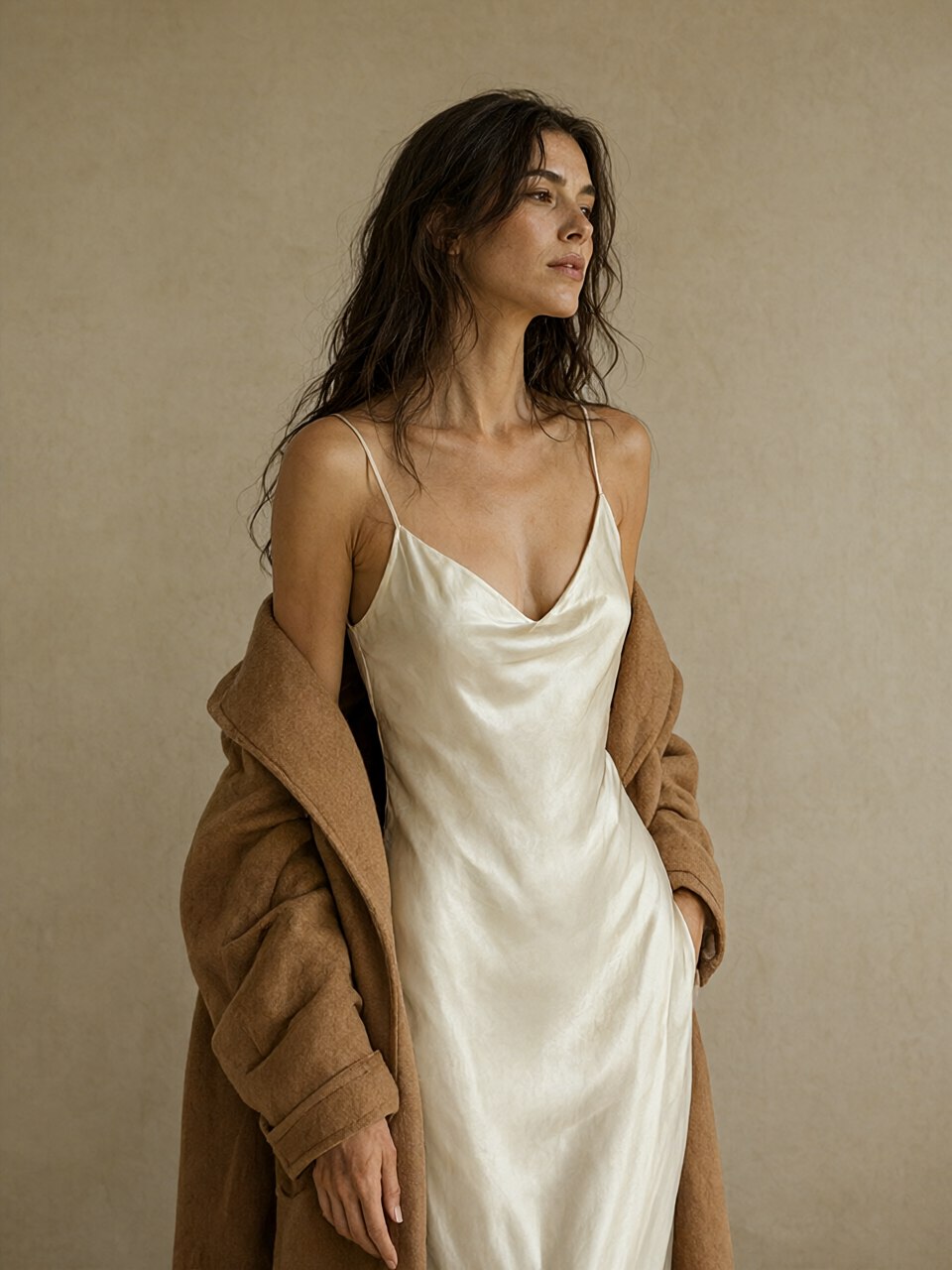
Roughly two thirds of the returns we see are size exchanges, and almost all of them could have been avoided with a tape measure and five minutes. Our size charts list body measurements, not garment measurements, because that is the number you can actually take without the garment in front of you.
Take three measurements
- Bust or chest — around the fullest part, tape horizontal, arms down.
- Waist — at the natural narrowing, usually just above the navel. Do not hold your breath.
- Hip — around the fullest part, feet together.
Write them down. Do not round to the nearest size out of habit.
Between two sizes
Size up for outerwear, knitwear and anything described as a relaxed fit. Size down for bias-cut silk and structured tailoring, which are cut with wearing ease already built in. If a product page does not say, ask us — we know which patterns run generous.
Reading the fit notes
Each garment page carries a model note with the model’s height and the size worn. That single line is more useful than any chart: it tells you whether the piece is meant to sit close or fall away from the body.
Bags are easier
Bag dimensions are given as width × height × depth in centimetres, measured flat. To judge capacity, compare against a bag you already own rather than against a photograph — a 30 cm tote looks modest on a model and holds a laptop, lunch and a pair of shoes.
Still wrong?
Exchanges are free within 30 days as long as the piece is unworn. Tell us the size you want when you write and we will hold it while your return is in transit.